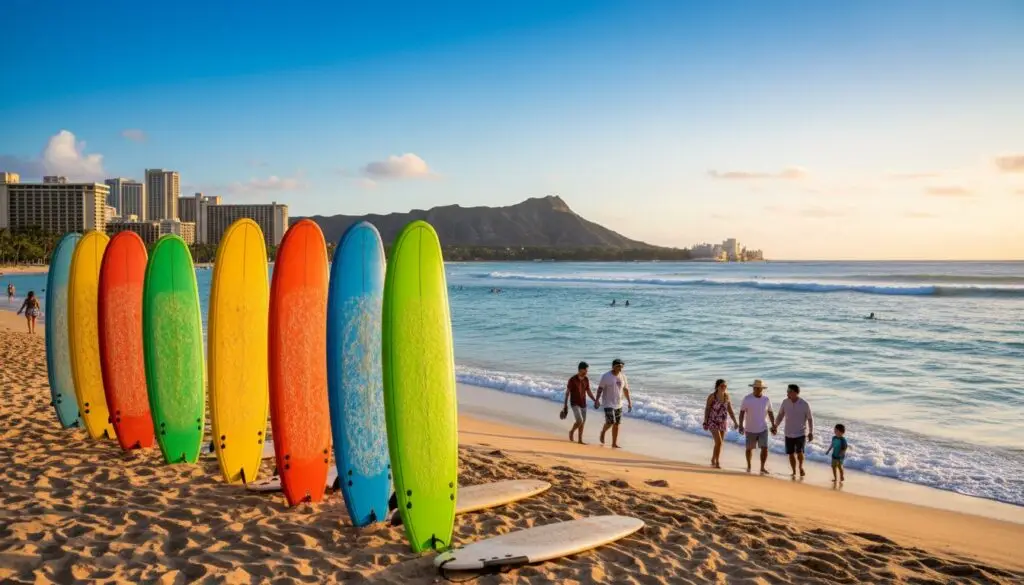
To learn to surf in Oahu is one of the most rewarding experiences Hawaii has to offer — warm turquoise water, consistent gentle waves, and world-class instructors all combine to create the perfect environment for first-timers. Whether you are visiting for a week or planning a longer stay, Oahu gives you everything you need to catch your very first wave with confidence. Last updated: 2026-06-27. Author: Star Beach Boys.
Hawaii has been the birthplace of modern surfing for centuries, and Oahu sits at the heart of that tradition. From the legendary breaks of the North Shore to the welcoming shores of Waikiki, the island offers a range of surf environments. However, for beginners, the focus should almost always start in one specific place.
Why Waikiki Is Ideal for Learning to Surf in Oahu
Waikiki Beach is widely regarded as the world’s most beginner-friendly surf destination. Its waves roll in slowly and consistently, breaking over a sandy bottom in a way that gives newcomers plenty of time to find their footing. Additionally, the water stays warm year-round, averaging between 75 and 80 degrees Fahrenheit, so there is no need for a wetsuit.
Two surf breaks within Waikiki stand out for beginners: Canoes and Queens. Canoes is the most popular, featuring long, slow waves that peel gently toward shore. Queens, meanwhile, sits slightly further out and offers a bit more power — making it a great next step once you have found your balance. Both breaks are closely monitored by surf instructors and lifeguards, which means safety is always a priority.
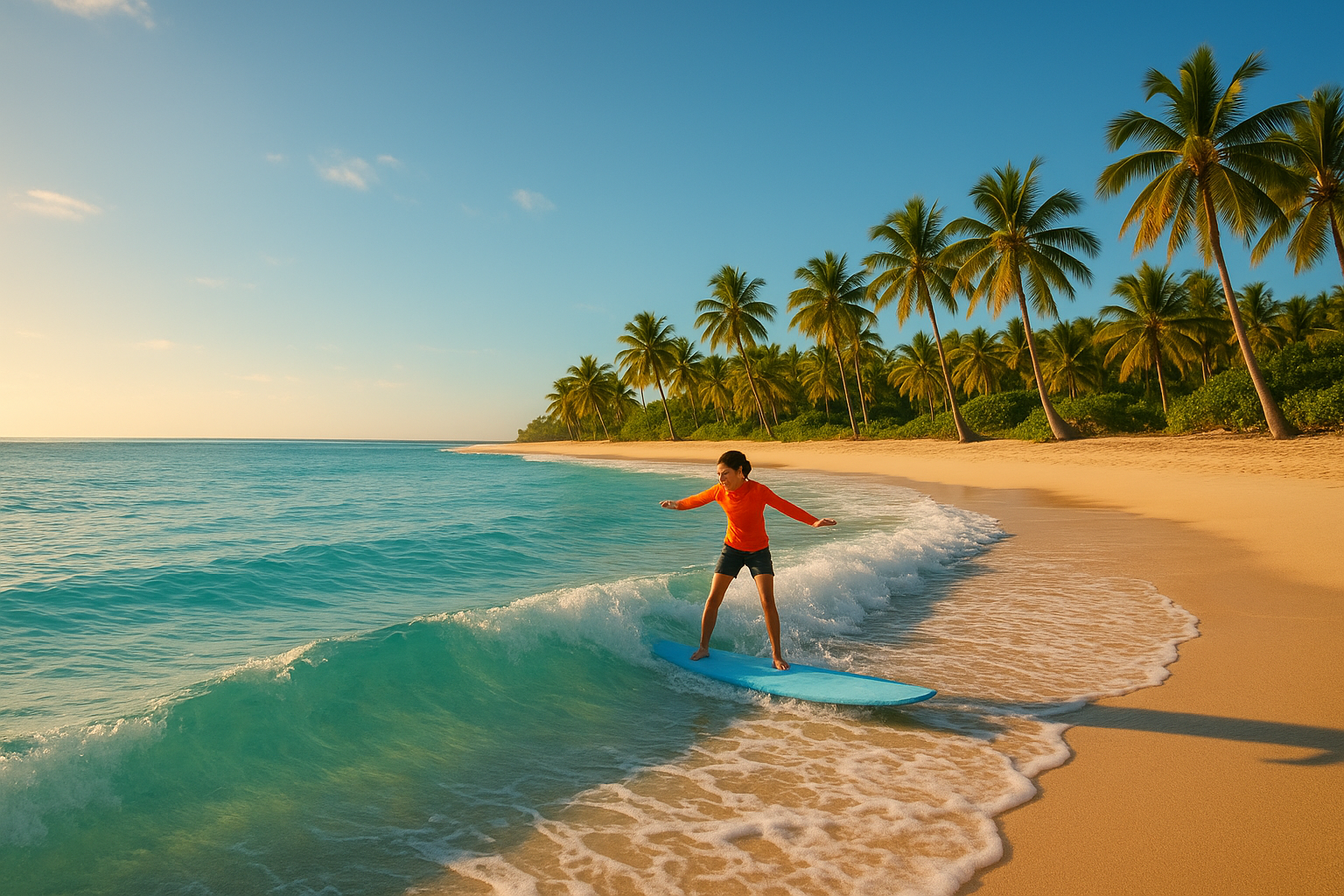
The gentle, rolling waves of Waikiki make it the perfect place to learn to surf in Oahu for the very first time.
What to Expect From Your First Surf Lesson
A typical beginner surf lesson on Oahu lasts between 60 and 90 minutes. It begins on the beach, where your instructor walks you through the fundamental techniques before you ever touch the water. This land-based portion is essential, so pay close attention. For practical session breakdowns, check learn to ride waves lesson examples.
During the beach session, you will learn the pop-up technique — the motion of going from lying flat on the board to standing upright in one fluid movement. You will also practice paddling posture, how to read incoming waves, and basic ocean safety rules. As a result, by the time you enter the water, the mechanics will already feel familiar.
Once in the water, your instructor will guide you into position and give you a gentle push to help you catch your first wave. Most beginners successfully stand up during their very first session. Therefore, do not be surprised if you find yourself riding a wave within the first 20 minutes of being in the ocean.
Step-by-Step: How Your Lesson Unfolds
- Choose your beach: Head to Waikiki for the gentlest, most beginner-appropriate conditions on the island.
- Book a certified lesson: Reserve your spot with a reputable surf school that provides boards, rash guards, and certified instruction.
- Learn on land first: Practice the pop-up, paddling form, and surf safety rules on the sand before entering the water.
- Paddle out and catch waves: With your instructor beside you, paddle into the surf zone and start catching small, slow waves.
- Practice and progress: Book follow-up sessions to build balance and eventually ride waves without assistance.
Choosing the Right Surf School and Instructor
Selecting a qualified instructor makes a significant difference in how quickly and safely you progress. Look for schools whose instructors hold certification from the International Surfing Association (ISA), the globally recognized governing body for surf instruction. Certified instructors understand ocean safety, proper technique coaching, and how to manage groups of different skill levels.
For example, Star Beach Boys is one of Waikiki’s established surf schools, offering beginner lessons right on the beach with experienced local instructors. For a clear step-by-step primer, read our complete beginner's guide. Schools like this typically include board and rash guard rental in their lesson packages, so you do not need to bring any equipment of your own.
In addition to certification, read recent reviews on travel platforms to gauge instructor patience, group sizes, and overall experience. Smaller group lessons — ideally no more than four students per instructor — allow for more personalized coaching and faster improvement. For specific advice on instruction and safety, review our lesson safety tips.
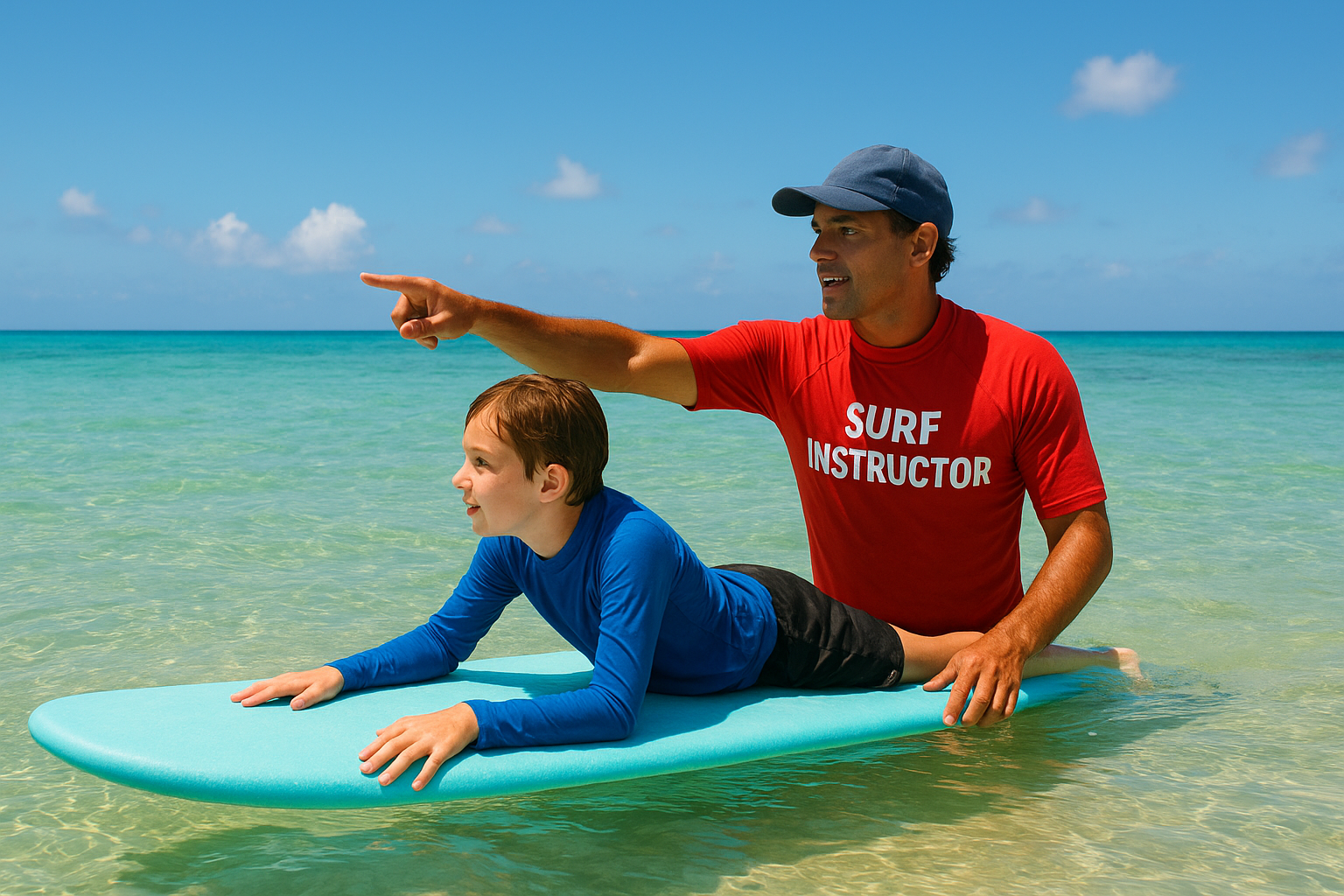
A qualified instructor makes all the difference when you are just starting out — personalized guidance builds confidence fast.
Equipment: What You Need as a Beginner
The right equipment dramatically affects how quickly a beginner progresses. For your first sessions, always use a foam soft-top surfboard, sometimes called a “foamie.” These boards are wider, thicker, and more buoyant than traditional fiberglass shortboards, which makes paddling and balancing far easier. Most surf schools provide them automatically.
Beyond the board, you will want a rash guard to protect your skin from sunburn and friction against the board. Apply reef-safe sunscreen generously before your lesson, as Hawaii law requires sunscreens to be free of oxybenzone and octinoxate to protect coral reef ecosystems. Finally, a leash — the cord that attaches the board to your ankle — is non-negotiable for safety.
Common Mistakes First-Time Surfers Make
Even with good instruction, beginners often repeat a handful of predictable errors. Knowing them in advance helps you correct them faster.
Looking down at the board is the most common mistake. Instead, keep your eyes on the horizon as you stand — your body naturally follows where your gaze leads. Additionally, many beginners stand too far back on the board, causing the nose to lift and slowing momentum. Aim to center your weight slightly forward once you are upright.
Another frequent error is tensing up during the pop-up. Therefore, practice the motion repeatedly on land until it becomes automatic. Finally, many beginners paddle too late. You need to start paddling hard before the wave reaches you — timing is everything in surfing.
Best Time of Year to Surf in Oahu as a Beginner
Summer months — roughly April through September — bring the calmest conditions to Oahu’s South Shore, where Waikiki is located. During this period, swells are smaller and more manageable, which is ideal for beginners. However, because Oahu’s water is warm year-round, surf lessons at Waikiki remain accessible and enjoyable in every season.
In contrast, the North Shore experiences massive winter swells between November and February that are strictly for expert surfers. As a beginner, avoid the North Shore entirely during these months and focus your energy on Waikiki’s consistently gentle waves.
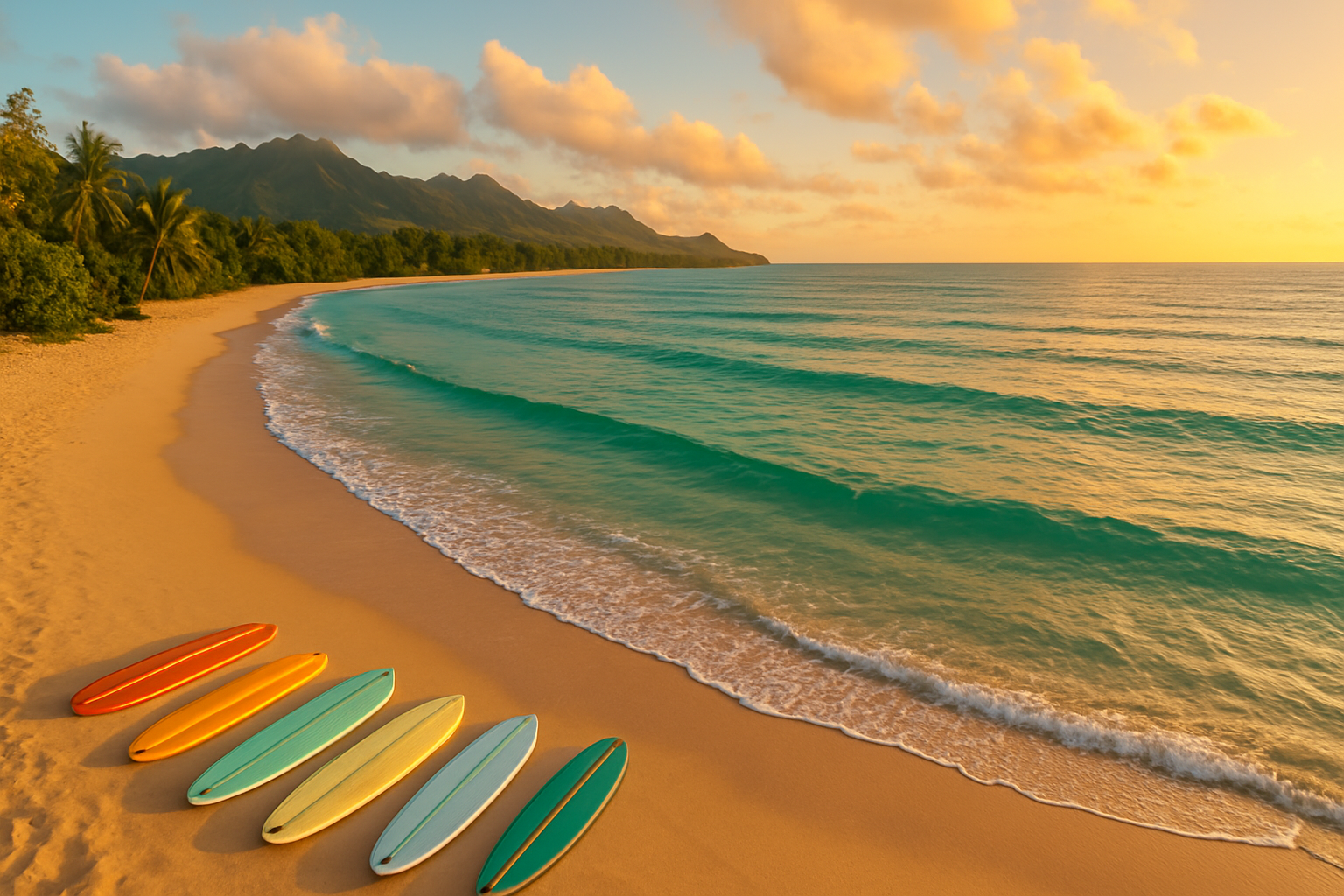
Summer months bring the calmest waves to Oahu’s South Shore, making them the prime season for first-time surfers.
Beyond Waikiki: Learn to Surf in Oahu — Beginner-Friendly Spots
While Waikiki is the undisputed starting point, a few other Oahu locations are worth exploring as you gain confidence. Ewa Beach on the island’s west side offers a quieter, less crowded alternative with gentle shore breaks. Similarly, Kailua Beach on the Windward Coast provides calm conditions and a beautiful setting, though it is better suited to paddleboarding than surfing for true beginners. Explore our best spots & schools for detailed recommendations.
For those who have completed a few lessons and want a slight step up in challenge, Publics (near the Waikiki end of Ala Moana) offers slightly more powerful waves without the crowded lineups of central Waikiki. In practice, most visitors find that Waikiki alone provides enough variety to keep them progressing throughout an entire trip. Learn how to find your perfect wave as you advance.
Quick Answer: Can Anyone Learn to Surf in Oahu?
Yes — Oahu, and Waikiki in particular, is one of the most accessible surf destinations on the planet. With warm water, gentle waves, and experienced certified instructors readily available, virtually any healthy adult or child with basic swimming ability can stand up on a surfboard during their very first lesson.
Frequently Asked Questions
Your First Wave Awaits
Choosing to learn to surf in Oahu is a decision you will not regret. The combination of warm water, welcoming waves, and experienced local instructors makes this island the ideal classroom for any first-time surfer. Start at Waikiki, book a certified lesson, and trust the process — Learn to Surf Oahu — your first wave is closer than you think.
As you progress beyond your first lesson, consider booking multiple sessions across your trip to build on each day’s progress. In practice, even two or three lessons can transform a complete novice into someone who can independently paddle out and catch waves. Therefore, give yourself the time to enjoy the journey — surfing in Oahu is an experience that stays with you long after you leave the island. When you’re ready, check how to find your perfect wave and advance your skills.